Public Health at the Forefront
Article by: Lisa Lopez Snyder
Originally Published
Heightened concern about increasing threats to public health—from avian flu and tick-borne pathogens to foodborne diseases and the New World screwworm—underscores the need for experts who can prevent their spread among humans and animals.
That’s why the recent recertification of The Ohio State University College of Veterinary Medicine’s Master of Public Health-Veterinary Public Health (MPH-VPH) program by the American College of Veterinary Preventive Medicine (ACVPM) is so significant, said Armando Hoet, DVM, PhD ’02, DACVPM, professor and founding director of the program.
“The ACVPM certification is an assurance that the college meets the highest standards to train the next generation of veterinary public health professionals,” Hoet said. “To be recognized by this group of experts as one of the few programs in the United States that reach that level of rigor and high standards is a major distinction.”
According to Hoet, 95% of alumni who have taken the ACVPM board exam after completing the MPH-VPH program have successfully earned diplomate status. “This is a clear indicator we’re definitely doing a strong job on training those veterinarians and other professionals to work in this field.”
Ohio State offers the only program of its kind in the United States. “Not only do we train veterinarians and veterinary students, but we also welcome other talented professionals from diverse fields into the program, creating a truly unique and dynamic learning environment,” Hoet said. “Most other certified programs limit enrollment to DVMs or veterinary students.”
A collaborative approach
A collaboration between the College of Veterinary Medicine and the College of Public Health, the MPH-VPH program was established in 2005 and accredited by ACVPM in 2010. It equips professionals with knowledge and skills to address zoonotic and foodborne diseases, food safety, environmental health, preparedness and emergency response, while providing a strong foundation in biostatistics and epidemiology.
Beyond preparing professionals to enter the marketplace or empowering them to advance their careers and become leaders in veterinary public health, the program also welcomes individuals pursuing advanced degrees such as DVM, MD, or PhD. The degree can be earned in 1 1/2 to 2 years, and includes coursework, a practicum or field experience, and an integrated learning experience.
The program also offers a three-year residency program to prepare veterinarians to protect and promote human health through One Health concepts. Ohio State’s MPH-VPH residency program is one of only five residency programs currently certified by ACVPM. Graduates have gone on to lead zoonosis prevention and control programs across the United States and globally.
Two student pathways
Hoet said the program serves two primary groups. The first includes professionals seeking advanced training or career advancement in veterinary public health. The second group includes students who want to become veterinarians or pursue further professional or graduate training.
“Among these pre-professional individuals, we have acceptance rates of more than 90% to professional college,” Hoet said. “Many come from rural communities or small colleges and lack experience in animal production, food safety and emergency response.”
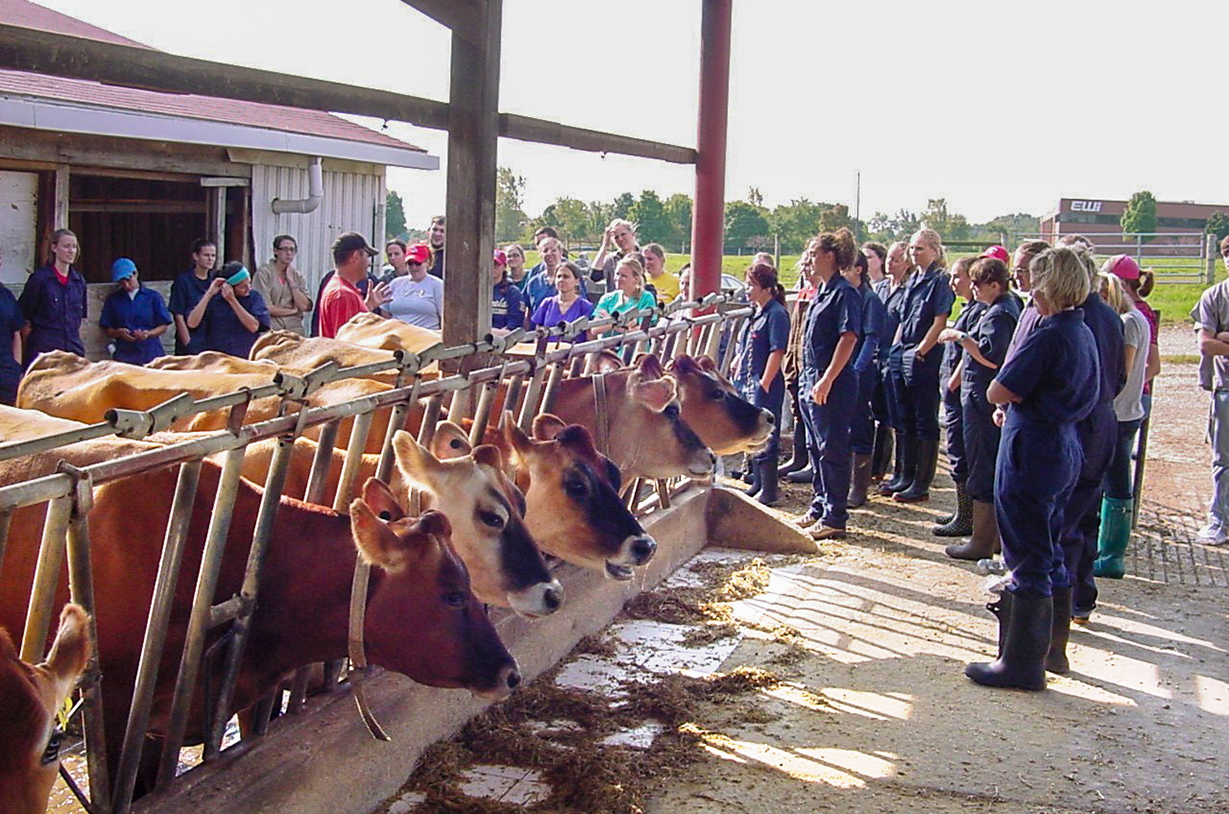
“Once these students enroll in the VPH program, they gain that experience, and we provide a strong support system to make sure they’re successful by increasing their competitiveness when applying to professional colleges, including Ohio State’s College of Veterinary Medicine,” Hoet said.
The program also serves as an alternative career pipeline. “We believe we can offer students from underserved rural communities a path to further education that either makes them more competitive for veterinary schools or provides an alternative professional career,” Hoet said.
“They go on to serve their communities at the critical human–animal interface, addressing major public health issues from food safety and zoonotic disease prevention to emergency response and food protection.”
Aligned with Protect OHIO
Hoet noted that the MPH-VPH program’s success aligns with the college’s Protect OHIO initiative to strengthen the pipeline of rural veterinarians and bolster Ohio’s resiliency against foreign and emerging animal diseases.
“More than half of our graduates enter the workforce immediately, many applying their MPH training on the human side of One Health. They return to their communities as health commissioners, infectious disease specialists, emergency responders, food safety experts and epidemiologists, serving local health departments across Ohio,” Hoet said.