Partnering in Care Across Ohio
Article by: Lisa Lopez Snyder
Originally Published
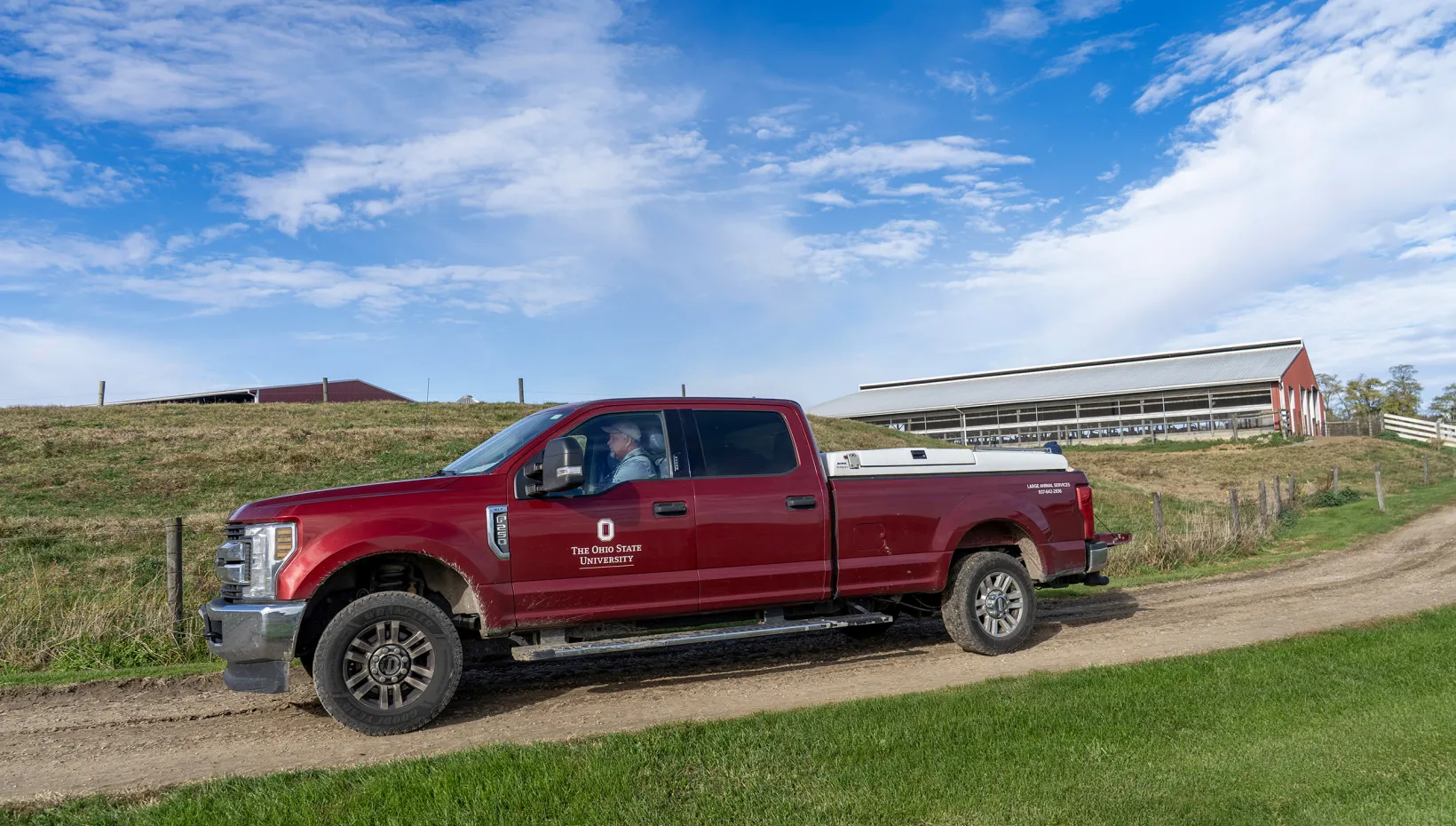
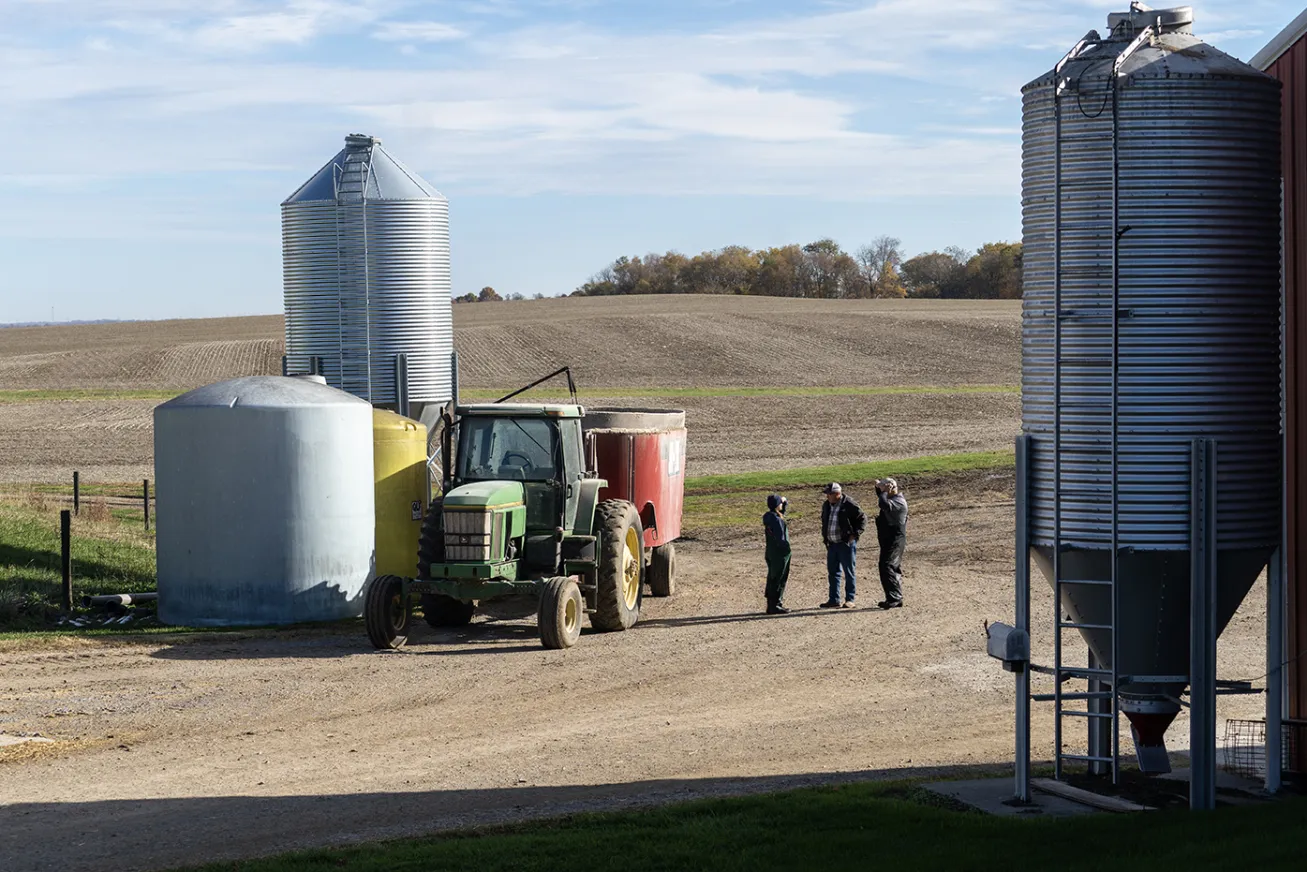
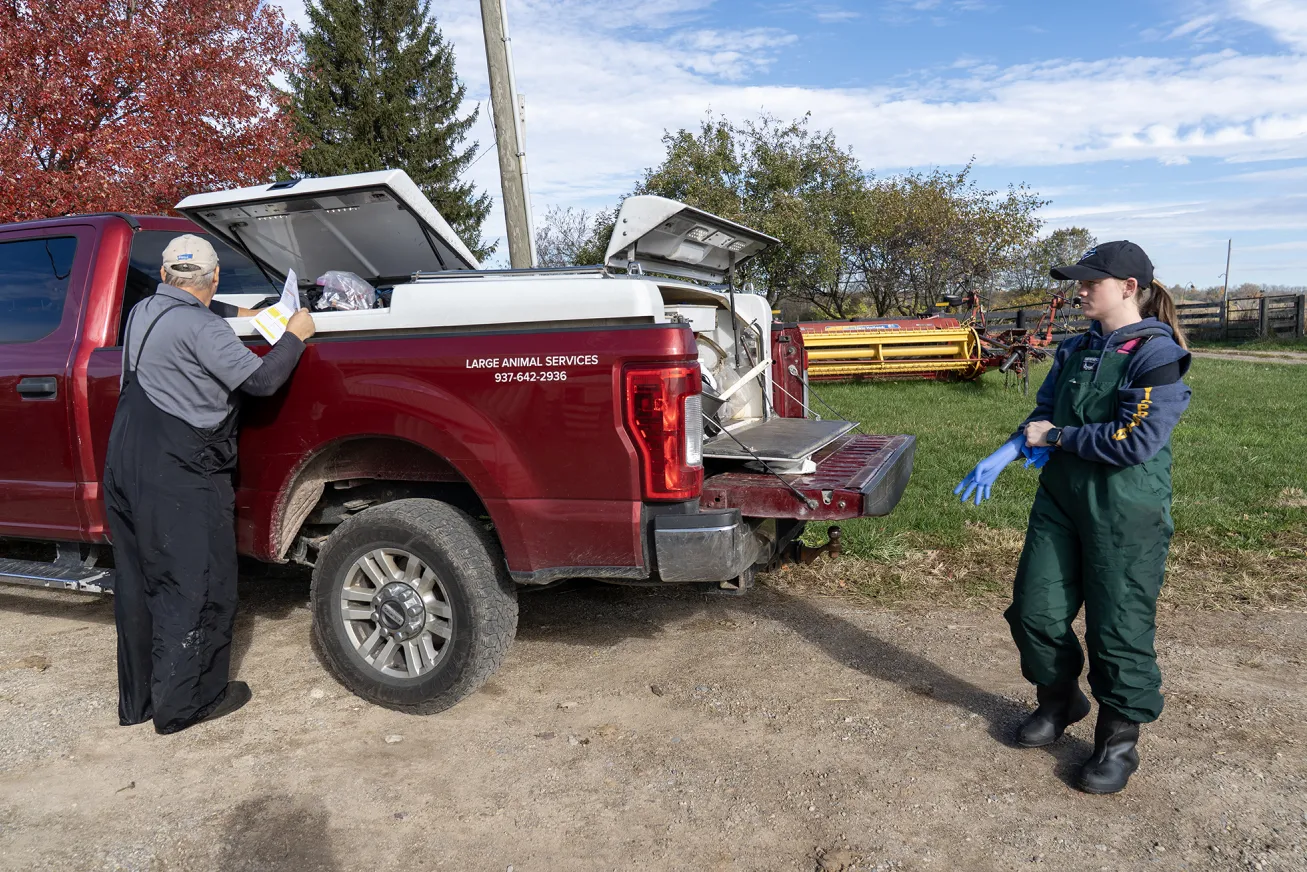
The sun has just risen in Logan County when a scarlet truck emblazoned with “The Ohio State University” pulls up to Four Henry Dairy in West Liberty, Ohio. It’s the first stop of the day for Eric Gordon, DVM ’97, DACVPM, clinical professor of Large Animal Services at The Ohio State University College of Veterinary Medicine and medical director of the Marysville Large Animal Service. Fourth-year veterinary student Brooke Bockey, on her farm rotations, joins him.
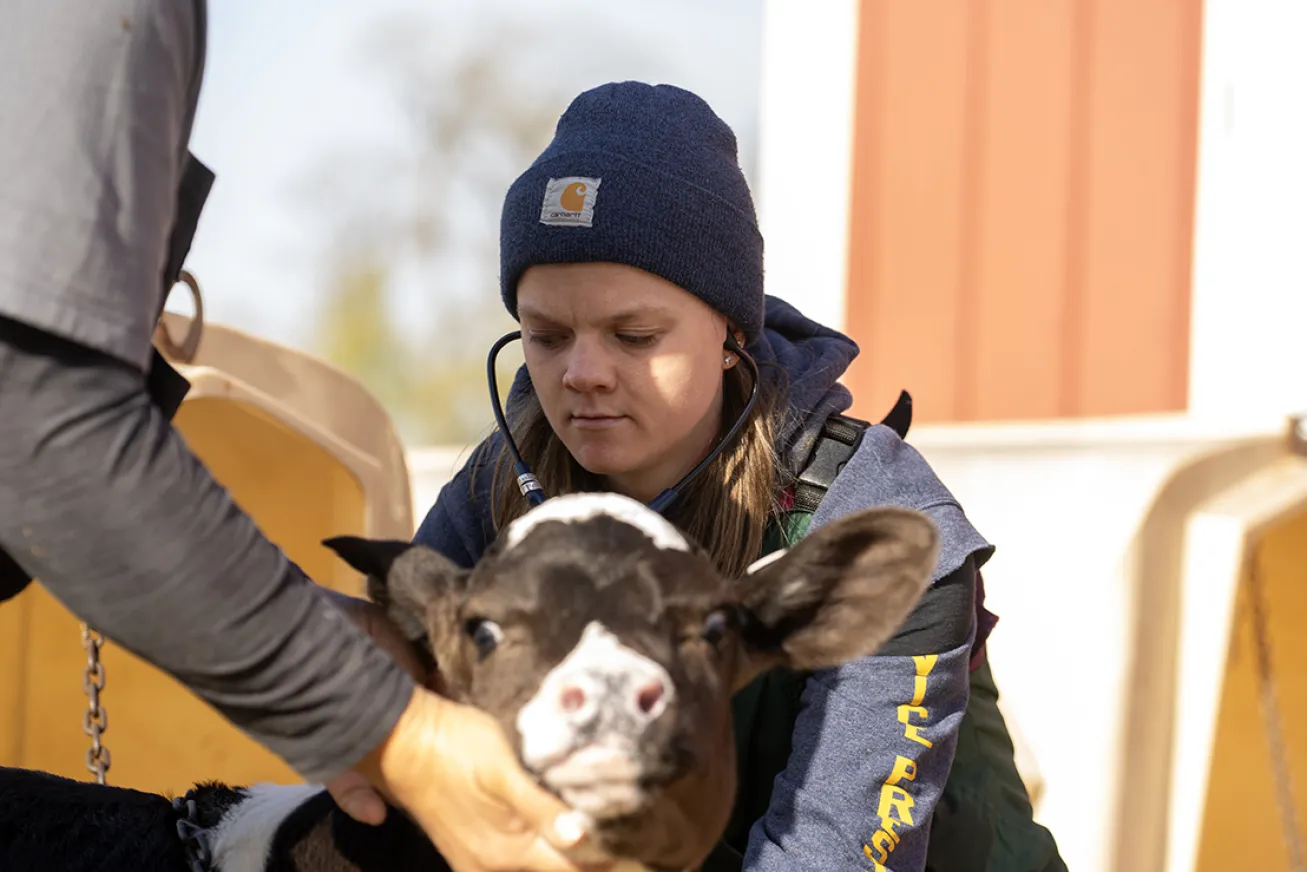
This morning’s task: pregnancy and reproduction checks for part of Mark Henry’s dairy herd. They perform palpations on the cows’ reproductive tract and conduct ultrasounds to help gauge pregnancy and to see where a cow is in her heat cycle.
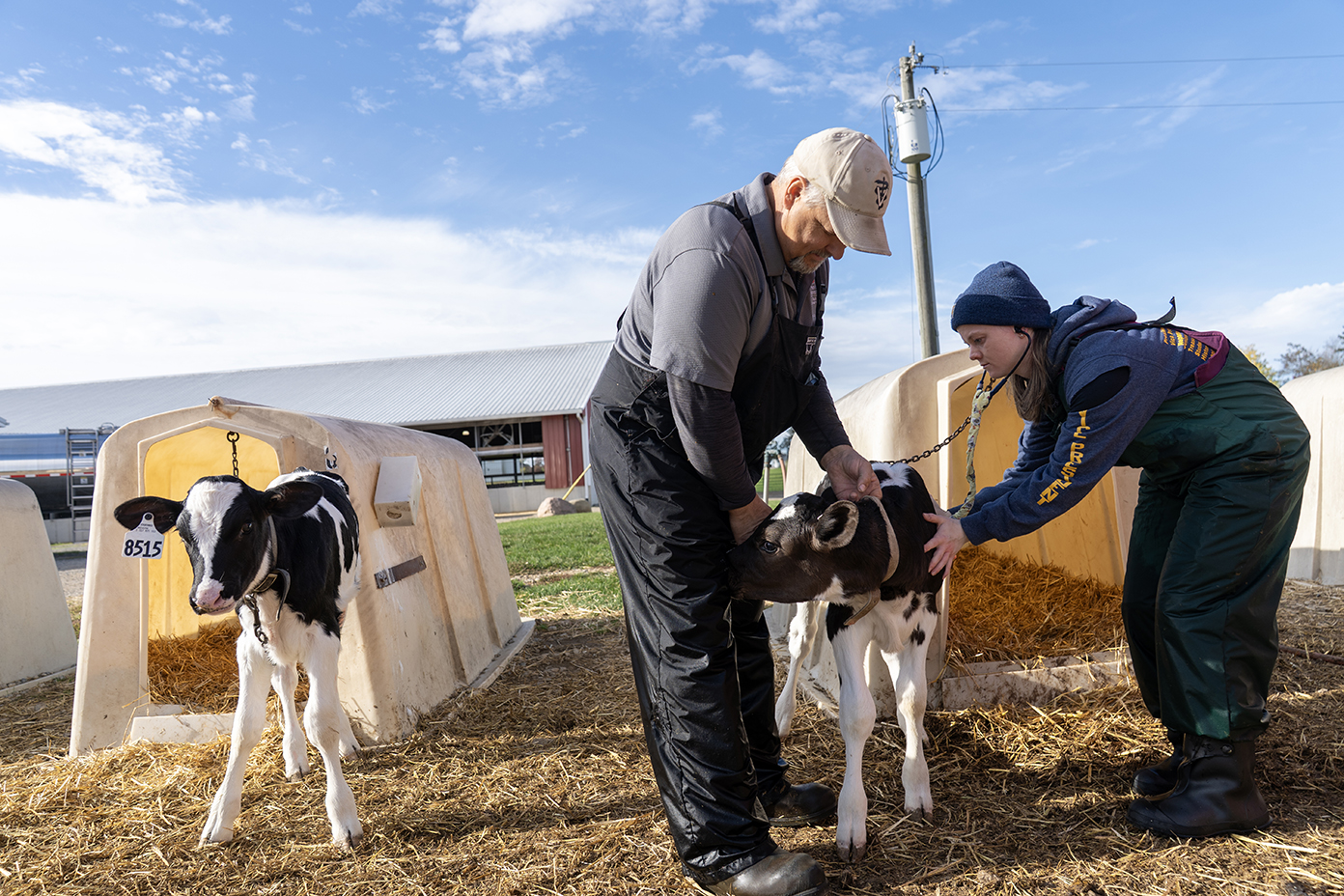
For Gordon and his farm-animal team, field visits begin in the morning. While some clients undergo routine health checks, as with the weekly Tuesday-morning herd check at the Henry Dairy Farm, there is no typical day.
“You just never know what the day’s going to be like,” says Gordon, who does a fair amount of dairy practice. “Almost every day of the week, we have a veterinarian or two heading out to a dairy farm to do herd health visits with our dairy clients.”
“Some of them take all day,” Gordon says. “Others might take three hours, and then we move on to other things in the afternoon.”
Built on trust
Farmers value the healthcare services that Gordon and his team provide. For Henry, who has relied on the Marysville team for years, that significance means years of a collaborative relationship built on trust, respect and friendship.
“Dr. Gordon supports our reproductive program and works with us to develop—and occasionally review—our vaccine protocols,” says Henry. “When we face an outbreak, whether it’s mastitis or a respiratory illness, we rely on him to identify the pathogen and guide us to the most appropriate treatment.”
Henry says relationships with the onsite Marysville practitioners can help ensure a healthy herd. “It’s important to me to have someone who has the best interests of our farm in mind,” he says. “That’s helpful, being proactive instead of reactive.”

About the service
The Marysville Large Animal Service is the farm field service arm of the Ohio State Veterinary Medical Center. The team provides on-farm care within a 60‑mile radius of the clinic and offers both individual and herd-based primary care, 24/7 emergency services, diagnostic support, and routine surgeries for cattle, pigs, goats, sheep, camelids, horses and backyard poultry.
Gordon and his team usually perform routine surgeries, exams, and other procedures on the farm. Still, in special cases, an animal may be hospitalized and cared for in the Marysville clinic.
On-site, emergency, and animal field visits are supported by five faculty veterinarians, one farm-animal resident, an intern and one house staff member. There are always one to three veterinary students in the clinic completing their two-week rotation with the service during their fourth year of veterinary school.
Relationships matter
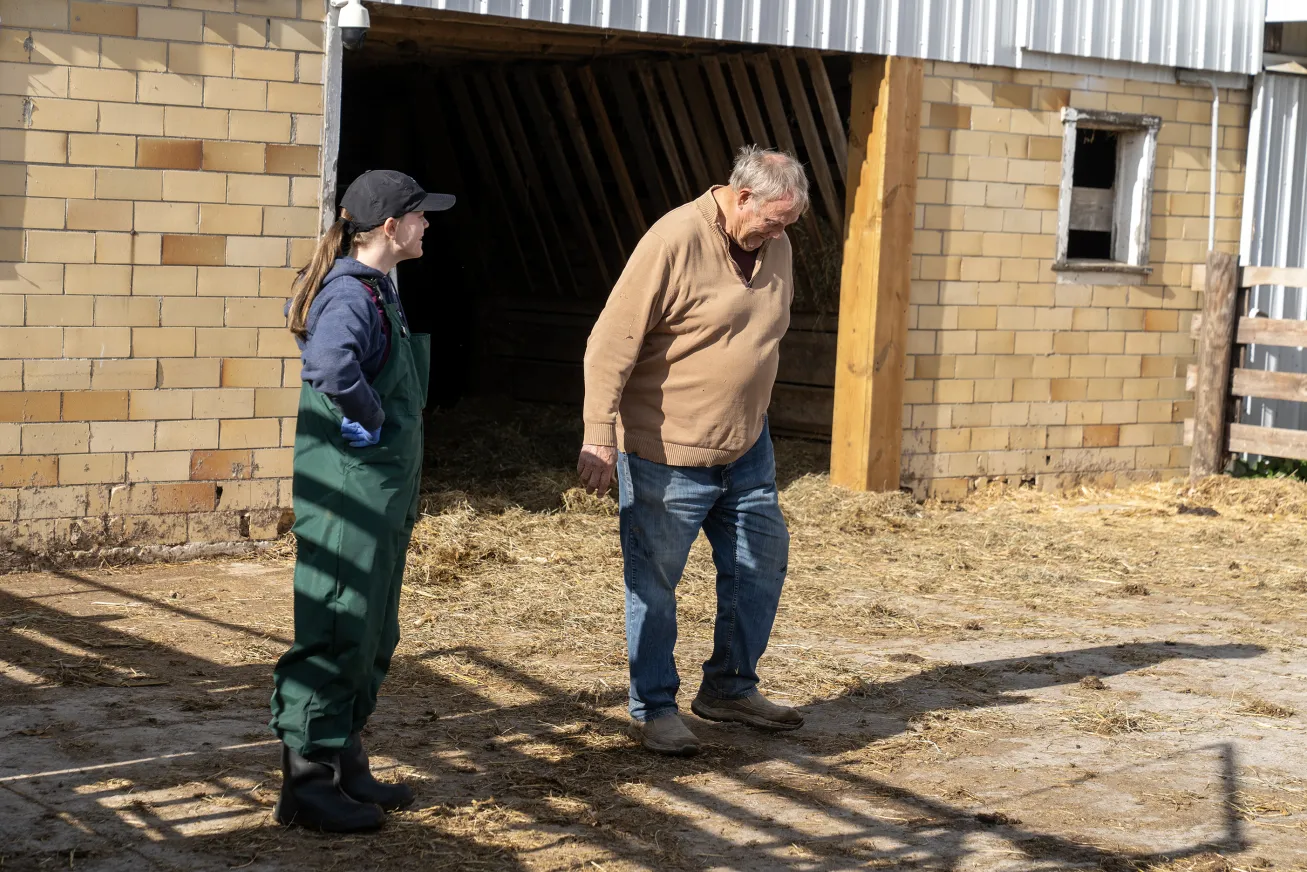
The next stop for Gordon and Bockey is Eric Parthemore’s cattle farm, also in West Liberty.
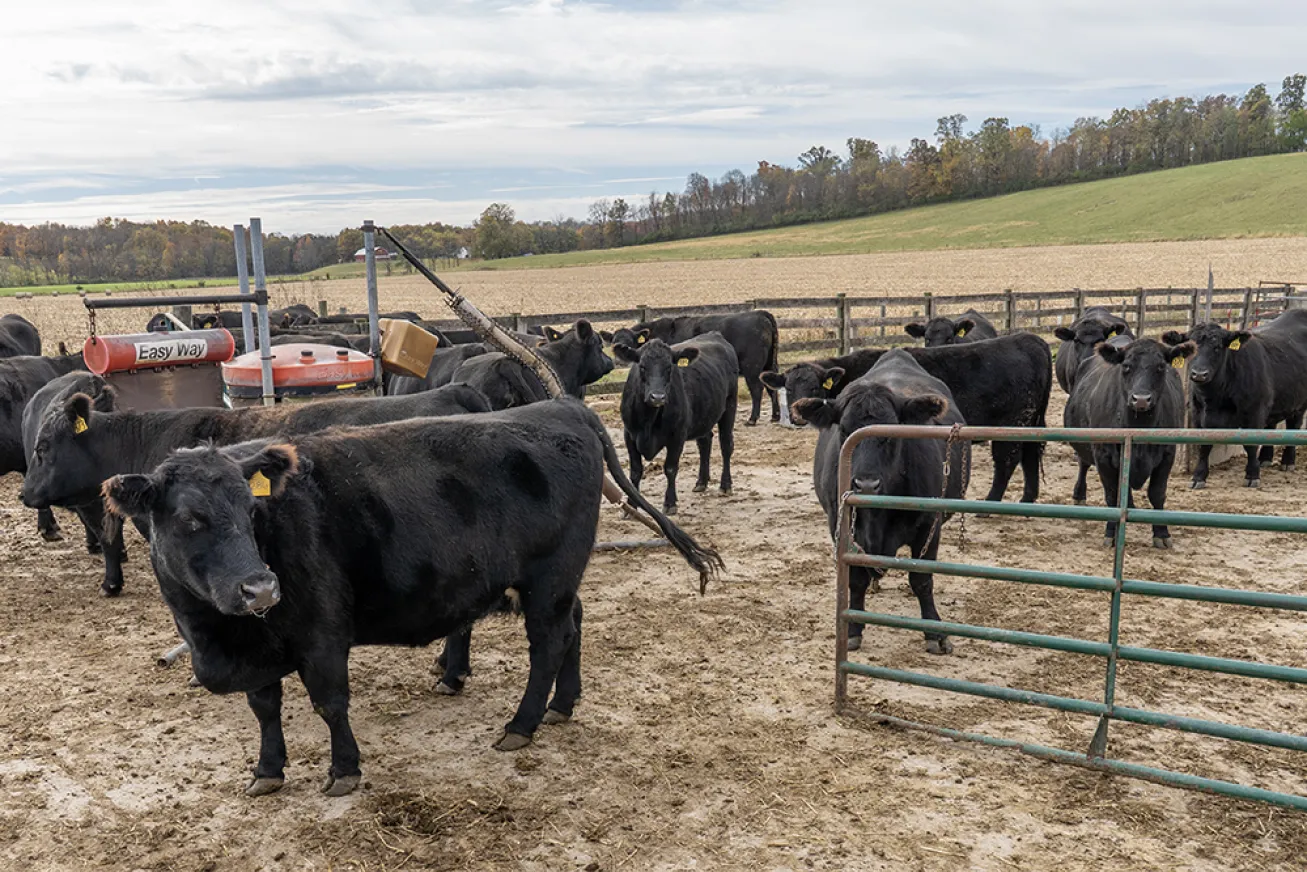
Parthemore has roughly 30 cows that he raises for breeding. Gordon and his team visit the herd seasonally, performing breeding soundness exams on bulls and reproductive herd checks in the fall, prior to calving, which happens in January and February.
Parthemore describes the Marysville Large Animal team as highly professional, treating clients with courtesy and respect. “They’re truly customer- and farmer-driven and demonstrate a genuine concern for the animals,” he says.
He also admires the professionalism of rotating veterinarian students. “I think Ohio State has an excellent teaching environment and they really encourage students to look at what’s best for the animal being treated.”
He adds, “If we run into a calving issue that’s beyond our capabilities, we call the Marysville team—and they’re always willing to come out, even on holidays."

On-site care and expanded facilities
Gordon notes the team’s ability to service animals both in the field and in the clinic has been helped tremendously by the 2000-square-foot expansion of the clinic and a remodeling project, both completed in 2024.
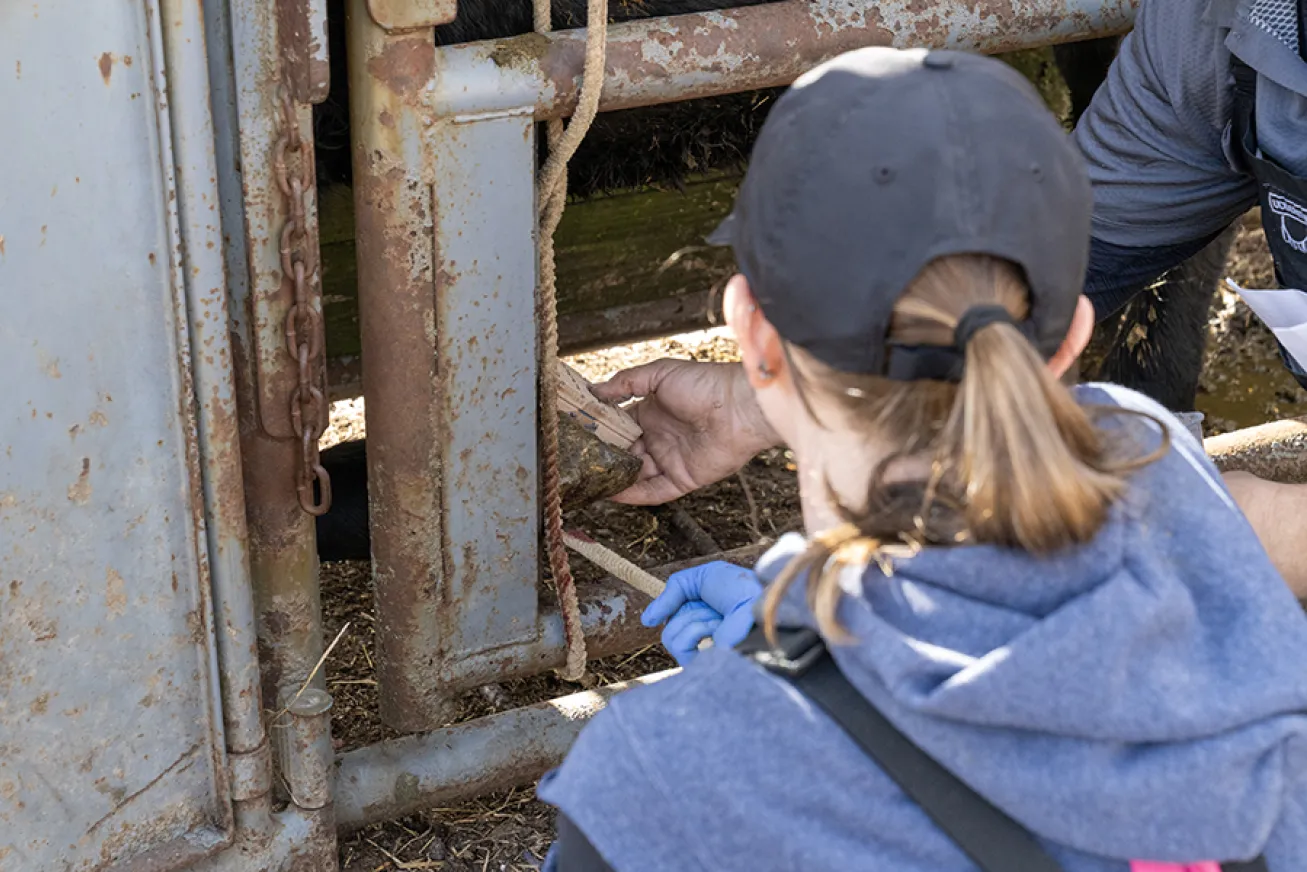
The new spaces include classroom and student-teaching areas, an enlarged treatment area that emphasizes safe animal handling, patient accommodations, a chute for safe patient reception, and improved client-trailer accessibility.
The receiving equipment encourages haul-ins, Gordon says, especially with cattle. “We can have clients bring their animals to us for certain conditions, which makes the treatment a little bit more efficient.”
Farmers often bring in male animals for breeding soundness exams, he says. “It’s also common for them to bring an individual sick animal in, for example, a small ruminant, like a goat or a sheep, which is easier to move.”
Other clinic services include castrations and obstetrics cases, including C-sections, as well as deliveries of calves, lambs, kids, piglets and foals.
The team also has some primary care hospitalizations for neonates with diarrhea or respiratory disease.
“If it’s intensive care level, then we refer to the Veterinary Medical Center, on main campus, as any other private practitioner might,” Gordon says.
Looking ahead
Gordon says the Protect OHIO initiative will be an important effort to support practitioners and farmers. Its focus on increasing the number of large animal veterinarians is critical as production livestock farms continue to consolidate, reducing their number without a decrease in animals.
“When I joined this practice 20 years ago, we had twice as many dairy farm clients as we do today, but we care for the same number of cows,” Gordon says. The small farms with dairy cows—the single most significant part of the Marysville practice—have a hard time competing in today’s competitive dairy market, he notes.
Another key Protect OHIO focus is zoonotic diseases, particularly the identification of highly pathogenic avian influenza (HPAI) in dairy cattle.
“Although HPAI isn’t generally viewed as a disease that readily spreads from animals to humans, there have been reported human cases, including some associated with contact with infected cattle,” he says.
Gordon and his team work with their clients to educate them about—and encourage them to routinely test for—HPAI. “The Henry dairy does its voluntary screening through the USDA,” he notes.
Gordon adds that one thing will never change for the Marysville Farm Animal Service team: their commitment to strong relationships and consistent communication with client farmers.
“We work to equip them with the knowledge to support their own success and to demonstrate how we can partner with them to safeguard their animals and themselves.”