Protect OHIO Aims High
Article by: Lisa Lopez Snyder
Originally Published
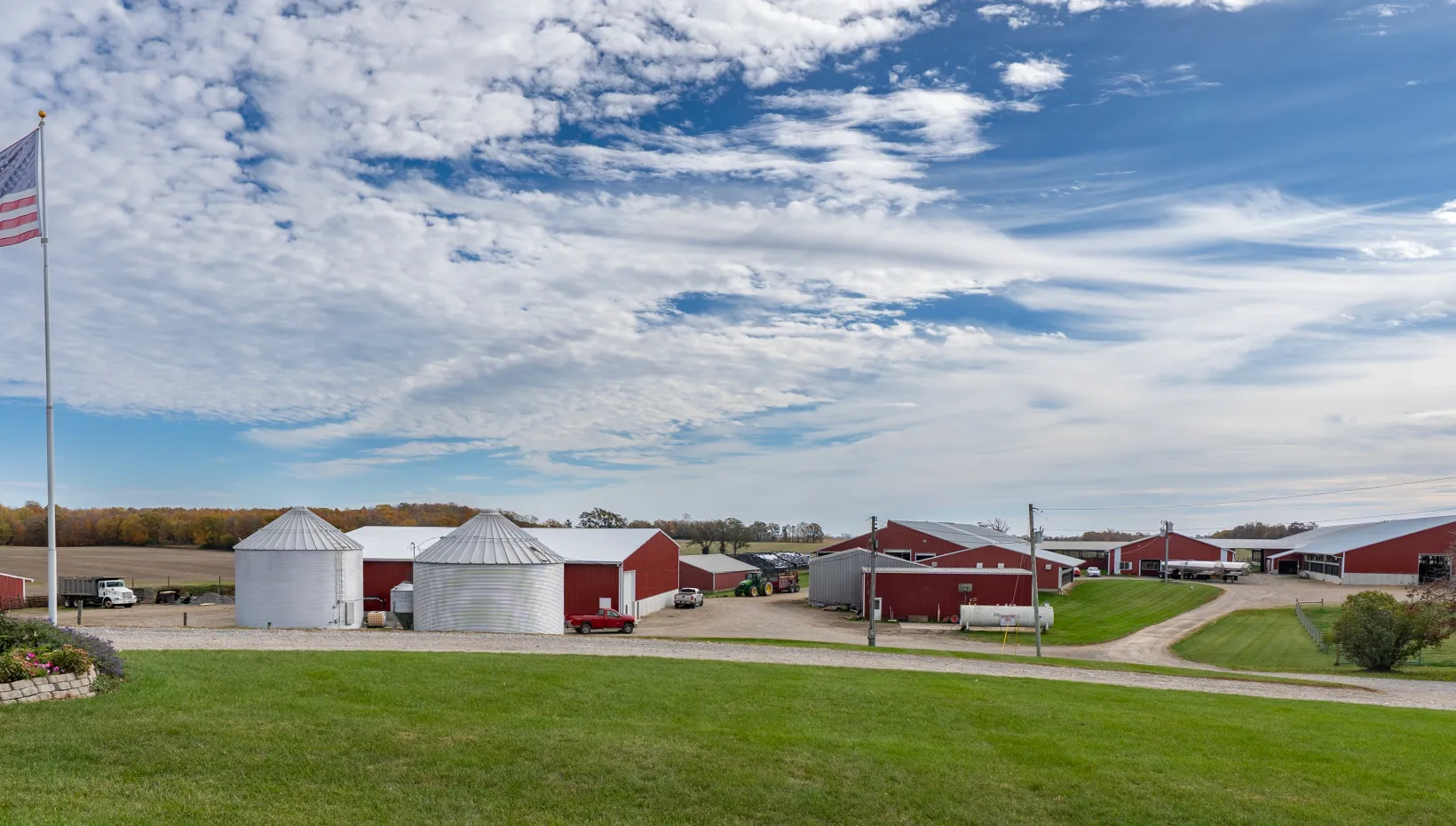
In the fall of 2025, The Ohio State University College of Veterinary Medicine launched Protect One Health in Ohio (Protect OHIO), an ambitious initiative to expand the veterinary workforce, protect public health and advance the state’s agricultural economy.
Backed by Gov. Mike DeWine and state legislators and supported by agricultural animal commodity groups and university leadership, Protect OHIO adopts a One Health approach—integrating animal, human and environmental health—to address pressing needs across Ohio’s rural communities and livestock sectors.
The initiative focuses on three goals:
- Educate more Ohio veterinarians to serve rural and large-animal needs.
- Build a pipeline by strengthening relationships with rural communities, recruiting Ohio students and mentoring early-career large-animal and rural veterinarians.
- Establish an Emerging Infectious Disease Center to expand efforts to prevent and control infectious diseases in Ohio livestock and poultry.
“A One Health approach to animal health, human health, and environmental health is how we have to look at these issues today,” said Rustin Moore, DVM ’89, PhD ’94, DACVS, Rita Jean Wolfe Endowed Dean at Ohio State’s College of Veterinary Medicine. “With global travel and trade, movement of animals, and the potential for rapid disease spread, we need integrated solutions that bring partners together.
Moore noted the college’s long-standing commitment to One Health principles. “We’ve been working in One Health for two decades. Protect OHIO takes a more holistic approach to address the gaps we see in the field.”
One gap is the shortage of veterinarians across Ohio’s rural counties. “We have too few veterinarians in certain areas of Ohio. Nearly a third of the state’s counties are considered underserved by veterinarians, according to the United States Department of Agriculture (USDA),” Moore said.
“Veterinarians are on the front lines: they conduct surveillance, assess and diagnose disease and alert appropriate officials if there’s evidence of an infectious disease outbreak.” Protect OHIO aims not only to educate more veterinarians but also to connect them with statewide partners to strengthen surveillance and response collaboration, Moore adds.
That broader view resonates with producers. “Ohio’s livestock farmers fear the devastation that can occur from foreign or domestic diseases that could wipe out herds and flocks,” said Scott Higgins, CEO of the Ohio Dairy Producers Association. “The sudden emergence of H5N1 transferring from birds to dairy cattle is a wake-up call for the livestock community.”
Protect OHIO Goal Areas
Each of the three Protect OHIO goal areas has a dedicated working group and collaborates with external partners, including federal, state, and local agencies; affiliate organizations; and farm communities across Ohio.

Protect OHIO’s first goal area focuses on educating more Ohio veterinarians to serve rural and large-animal needs.
A college working group is developing plans to increase the number of large-animal veterinarians graduating each year to address Ohio’s rural veterinary shortage.
“To support this effort, the college’s goal is to increase the class size from 165 to 200 over time, beginning with 10-12 additional students in fall 2026,” said Alison Gardner, DVM, MS ’15, DACVS-LA, DACVECC-LA CVA, interim associate dean for Professional Programs and associate professor of veterinary clinical sciences.
The initiative also aims to increase in-state enrollment from a historical 50 50 split with out-of-state students to 60–70%, with a focus on rural Ohio students who are more likely to return to their communities to practice, including in large animal medicine.
To build a pipeline of rural Ohio students, the college is partnering with agricultural institutions and Ohio colleges, including Ohio State’s College of Food, Agricultural, and Environmental Sciences, the University of Findlay, Otterbein University and Wilmington College, to establish mentoring groups and strengthen recruitment.
To accommodate enrollment growth and enhance instruction, the university will renovate the college library to create a flexible classroom for small group, case-based learning and modernize the Veterinary Medical Center auditorium. The college will also update lecture halls with more flexible space designs and advanced classroom technology to enhance the overall learning experience.
These updates support the college’s Spectrum of Care approach, which prepares students to deliver effective care across a range of clinical and resource settings, including rural practice.
“We’re helping students understand what is required in an application for veterinary college, identify the experiences that will strengthen their candidacy and work with those colleges to recruit students to Ohio State.”
— Dr. Alison Gardner

Protect OHIO’s second goal area focuses on providing support and mentorship to advance the pipeline of Ohio students interested in large-animal and rural veterinary medicine.
This work includes building relationships with rural communities—from school principals, parents, teachers and guidance counselors to chambers of commerce, county commissioners and youth development groups such as 4-H and FFA—to recruit graduates into veterinary training and practice.
The plan also includes scholarships and mentoring programs for veterinarians just entering practice, said Alecia Naugle, DVM ’98, PhD ’03, chair of the Department of Veterinary Preventive Medicine and of the attract and retain workgroup.
Naugle, who grew up in 4-H and FFA and brings more than two decades of public service in veterinary preventive leadership, including work as a national animal health and food safety expert with the U.S. Department of Agriculture’s Animal and Plant Health Inspection Service. She is leveraging longstanding connections across the agricultural industry to advance the effort.
Among the group’s first steps is a partnership with the Ohio Department of Agriculture and the nonprofit Farm Journal Foundation to conduct a statewide readiness assessment of Ohio’s veterinary workforce infrastructure. The effort will identify gaps and develop a framework to bring stakeholders together to address them, Naugle said.
As part of the initiative, she has convened nearly 40 leaders from Ohio’s animal agriculture sector for several months of data collection and analysis, culminating in an in-person meeting to provide recommendations on next steps.
Naugle also emphasized the importance of exposing rural youth to veterinary medicine through targeted outreach, including science curricula, “grab and go” recruitment kits and other engagement activities to build a future pipeline of veterinarians.

One example is the Swientist program, funded by the Council of State and Territorial Epidemiologists.
The college partners with the Ohio Pork Council to reach young exhibitors through hands-on learning activities offered via Ohio State Extension and 4-H Animal Sciences.
Another external partner, the Ohio Veterinary Medical Association (OVMA), has engaged with Protect OHIO from the start, working with Moore and others at the college to advocate at the Statehouse, said Chris Henney, OVMA executive director.
OVMA members will continue to serve as a sounding board and stay engaged, Henney said. “There will be many opportunities for our members to provide input and feedback as this develops.” The college is partnering with OVMA to conduct a focus group at OVMA’s Midwest Veterinary Conference in February to gather feedback on the program and its direction.
For Brooke Bockey, a fourth-year Ohio State veterinary student, this outreach is essential to recruiting more students into large animal medicine. She expects to return near her hometown of Spencerville, Ohio, to practice.
“I like the versatility of this work—going out to the field and into the clinic for a couple of hours. Staying in Ohio makes this possible,” she said.
The need for large-animal medicine will grow, Bockey added, as Ohio is the 11th-largest agricultural exporting state, according to the USDA. “Large animal veterinarians do a lot of education and support for overall farm management. Often, the veterinarian is the point person for farmers’ questions, so building stronger personal and business connections is critical.”
The Ohio Dairy Producers Association shares that view. “Veterinarians serve a critical role in herd health and animal care as they work alongside dairy herd management. Ongoing communications, guidance and timely insights on disease surveillance, identification and treatment are essential for dairy farmers,” said Scott Higgins, president and CEO of the Ohio Dairy Producers Association.

Protect OHIO’s third goal will establish an Emerging Infectious Disease Center to expand efforts to prevent and control infectious diseases in Ohio’s livestock and poultry, building on the rich history and tradition of the Department of Veterinary Preventive Medicine.
The center is designed to connect the college’s expertise with others across the University and throughout the state to coordinate surveillance, share data and strengthen response capabilities across the agricultural sectors that power Ohio’s economy.
“The vision is a united front of farmers, veterinarians, scientists, regulatory authorities and communities—ready for whatever pathogen comes next,” said Greg Habing, DVM, MS, PhD, DACVPM, professor and vice chair of the Department of Veterinary Preventive Medicine and chair of the strengthen disease prevention workgroup. “Our goal is to conduct the necessary research, surveillance and outreach with a level of coordination we haven’t had in the past, all to prevent or at least limit the impact of a future pandemic.”
Habing pointed to recent challenges as evidence of the need. The nation was not sufficiently prepared for COVID 19, and when highly pathogenic avian influenza emerged in dairy cattle, many farms lacked the capacity to manage the outbreak. “It spread for months before it was recognized, and we learned a lot. Trust was a problem. Infected farm workers were afraid to seek medical attention. Farmers were afraid to test their cows. That contributed to how far and how long it spread before recognition,” he said.
“The next pandemic for animals or people isn’t an if; it’s a when.”
— Dr. Greg Habing
The center will build on the work of faculty such as Andy Bowman, MS ’05, DVM ’07, PhD ’13, DACVPM, a professor in the Department of Veterinary Preventive Medicine who leads the Animal Influenza Ecology and Epidemiology Research Program.
Bowman and his team study highly pathogenic avian influenza, exploring how it spreads between farms and among animals. They work at Ohio State’s College of Food, Agricultural, and Environmental Sciences biosafety level 3 lab in Wooster—one of the few facilities in the country equipped to handle such pathogens and large animal species, including dairy cattle.
The center will also leverage the research and expertise of Risa Pesapane, MS, PhD, an associate professor in the Department of Veterinary Preventive Medicine and a community disease ecologist.
A new study published by Pesapane’s lab finds the risk for being bitten by a tick infected with bacteria that causes Lyme disease is as high in Ohio as it is for those living in Northeast states that have dealt with Lyme disease for over 50 years.
Pesapane noted that the risk of Lyme disease varies across Ohio and is highest in forested areas in the eastern and southern regions of the state. That said, the presence of blacklegged ticks has been reported in all 88 counties.

Photo: Risa Pesapane
“If we look from 2010 all the way to 2025, there’s been a 48-fold increase in the number of Lyme disease cases in Ohio, and we are going to be considered a high-incidence state moving forward.”
— Dr. Risa Pesapane
An external advisory group includes state regulatory agencies, such as the departments of health and agriculture, and Ohio leaders of U.S. agricultural commodities, including the Ohio Poultry Producers, the Ohio Pork Council, the Ohio Cattlemen’s Association and the Ohio Dairy Producers Association.
Dennis Summers, DVM ’06, DACVPM, state veterinarian for Ohio with the Ohio Department of Agriculture, said the center offers an excellent opportunity to serve as a clearinghouse for trusted scientific information that producers and veterinarians rely on.
“The university is well qualified and experienced and has the right tools to share biosecurity information. We want the center to succeed so producers feel they have a safe place to go for guidance and use it to prepare for disease events,” Summers said.
Habing added that one of the department’s strengths is its externally facing work. “Our faculty are out in the field, working with farmers, regulators and industry leaders. To do what we do, we need excellent relationships with producers and agencies. Those relationships will make Protect OHIO transformative.”
Why it matters
Ohio’s agricultural economy depends on healthy herds and flocks and a reliable veterinary workforce. When diseases emerge or spread, veterinarians are the first line of defense—assessing animals, diagnosing, reporting and coordinating with public health and agriculture agencies to contain outbreaks. The recent spread of H5N1 from birds to dairy cattle underscored the speed and cross-species nature of modern disease threats and the importance of coordinated surveillance and rapid response.
Protect OHIO addresses that need by educating more veterinarians, building a robust pipeline of Ohio students and formalizing statewide collaboration through a virtual disease center. The result is a stronger, more resilient veterinary infrastructure for the state — one that supports farmers, protects animal and human health and sustains rural communities.
What's Next
With state budget support in place and other college and university funds identified, the College of Veterinary Medicine is moving quickly to implement Protect OHIO. Hiring is underway to support expanded enrollment; renovations will add more flexible, small-group learning spaces; and admission strategies are shifting to increase Ohio residents and prioritize rural applicants.
As Protect OHIO progresses, the college and its partners will monitor outcomes—including the number of graduates entering large animal and rural practice, county-level coverage trends, scholarship impact, and surveillance improvements—to measure progress and refine programs.
“This is about meeting Ohio’s needs,” Moore said. “By educating more veterinarians and helping them return to serve their communities, investing in those communities and strengthening disease prevention and control, we’re building a healthier future for animals, people and the environment they share.”

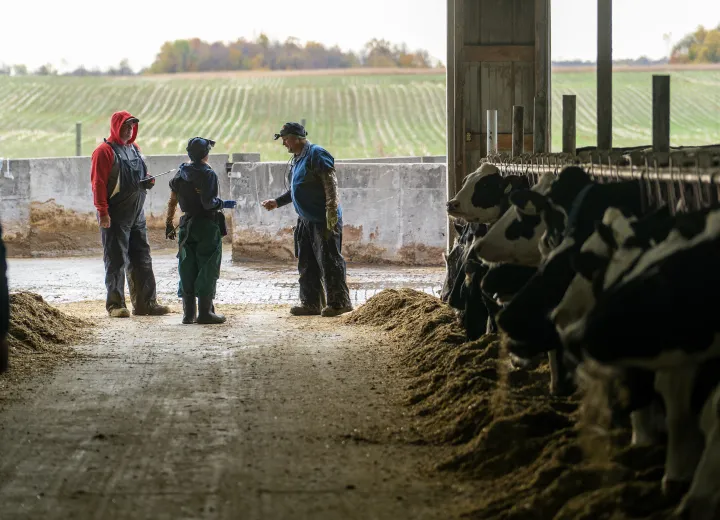
Dr. Eric Gordon and fourth-year veterinary student Brooke Bockey consult with one of the farm managers at Four Henry Dairy Farm.